
Trailblazers
Introducing phenomenal women who made major impacts to Computer Science and Technology
Tech Women in History
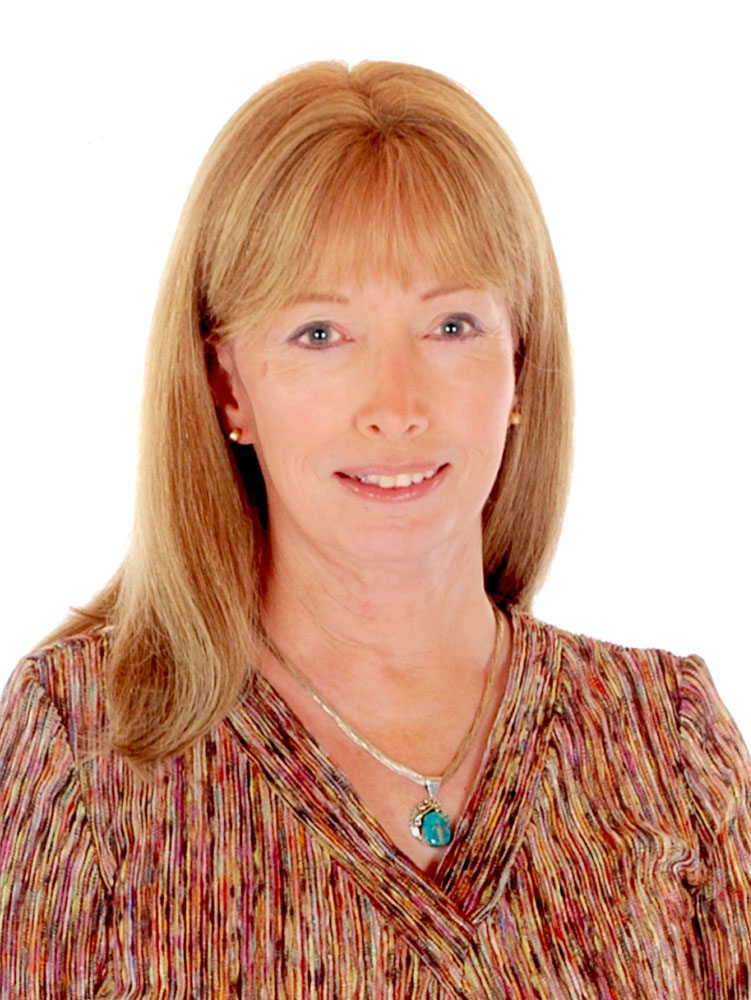
By Charles Rogers – ai.eecs.umich.edu/people/conway, CC BY-SA 2.5, commons.wikimedia.org
Lynn Conway
A chip-designing superhero with a secret origin story
Lynn Conway co-invented Very Large Scale Integration (VLSI) in the late 1970s—methods that simplified designing millions of transistors on a single chip. Every device today builds on techniques she developed with Carver Mead of Caltech. Conway was VLSI’s creative lead, proving the methods at her Xerox PARC lab before teaching them at MIT in 1978. Within two years, her course had spread to 110 universities worldwide.
Late in her career, Conway came across an article about an early IBM supercomputer whose author admitted not knowing much about its origins. She had actually designed a key part of it—Dynamic Instruction Scheduling, still used today—but had kept it secret after changing her gender and name post-IBM. Contacting the author launched her journey to reconcile both parts of her life, eventually becoming a trans advocate.
Learn more in this Computer History Museum article (a 2 min read), and for her full life story see this LA Times article.
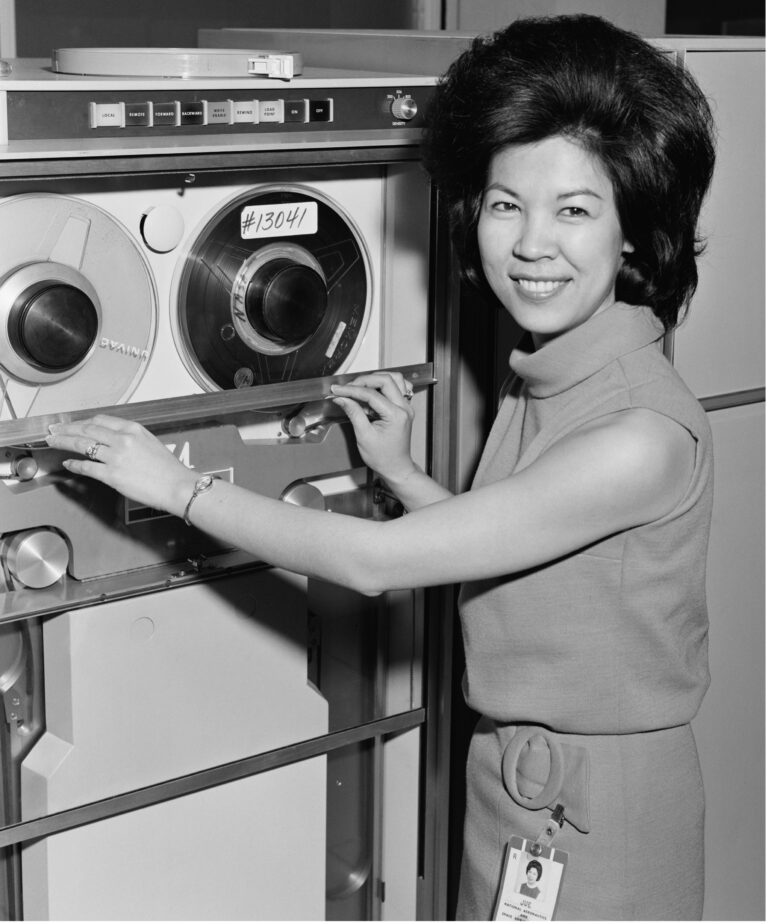
By Inferred to be NASA – Public Domain, https://commons.wikimedia.org/w/index.php?curid=132556921
Josephine Jue
Advancing Software and Advocating for Women at NASA
Josephine Jue became interested in math as a young girl working the cash register at her parent’s grocery store. At the University of Houston, she majored in math and chemistry and took classes in computer programming. It was the 1960s and NASA had just announced it would build the Manned Spacecraft Center (MSC), later renamed the Johnson Space Center. After graduation she was offered a job as a mathematician in the Computation & Analysis Division, focusing on financial, procurement, and logistics. In 1975 she pivoted to software development and testing for the Space Shuttle, the first heavily software-based NASA spacecraft. NASA soon began outsourcing Shuttle software, and Jue oversaw the design and testing of the software for all Shuttle missions, enforcing rigorous safety and quality standards, and incorporating flight simulators into the software validation process. She finished her career at NASA in 1997 after 34 years. During her time at the MSC she helped propel the transition of women’s contributions from primarily clerical work to flight directors and astronauts; she even saw a woman named to lead the MSC in 1994. Learn more at Medium interview (a 2-min read), and this American Mathematical Society article.
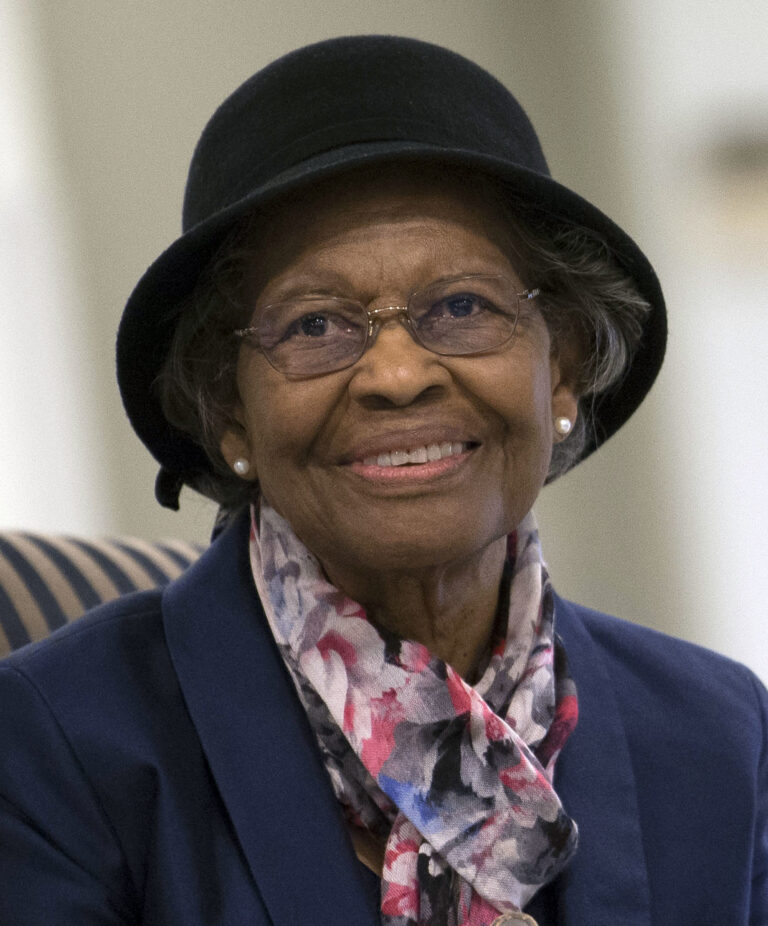
By Adrian Cadiz – This image was released by the US Air Force with ID 181206-F-DT527-087. Public Domain, https://commons.wikimedia.org/w/index.php?curid=182122948
Gladys West
The Hidden Figure Behind GPS
Gladys West grew up on a farm and dreamt of bigger things. She graduated at the top of her high school class and was awarded a college scholarship. In college she majored in math, taught for a few years, and then went back to get her Masters. In 1956 she was hired by the Navy at Dahlgren VA, where she worked on planetary motion, which led to her creating models of the Earth’s shape. Later, in the 1970s and 80s she programmed an IBM supercomputer to calculate a very precise model of the Earth’s shape. A Space Force tribute to her says, “Without that model, the extraordinary positioning, navigation, and timing accuracy of GPS would be impossible to achieve.” A commanding officer of the Navy at Dahlgren said, “As Gladys West started her career as a mathematician at Dahlgren in 1956, she likely had no idea that her work would impact the world for decades to come.” She passed away in January, 2026. For a fun dive into GPS and her contribution, see this.
Lesson: Dream and work hard. But don’t forget to dream!
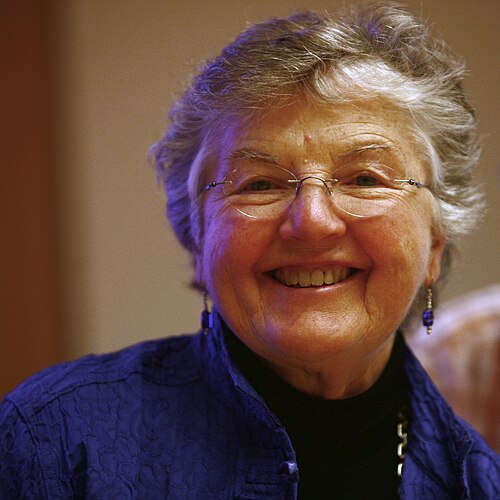
By Rama – Own work, CC BY-SA 2.0 fr, https://commons.wikimedia.org/w/index.php?curid=4844465
Frances Allen
First woman to receive the Turing Award
Fran Allen began her career at IBM in 1957, working in the emerging field of programming languages, and retired in 2002 after 45 years of foundational contributions to optimizing compilers. Early compilers—designed to translate English-like commands into machine language—produced programs that were larger and slower than hand-written machine code. Allen, working with an IBM colleague, helped change that by creating compilers worthy of IBM’s state-of-the-art computers.
In 2006, Allen received the prestigious A.M. Turing Award “for pioneering contributions that laid the foundation for modern optimizing compilers and automatic parallel execution.” She was also the first woman named an IBM Fellow, in 1989. Enjoy this 4-minute read, and watch this short video (from 3:00 to the end) where she offers a powerful analogy between mountain-climbing teams and professional networks—supporting one another and, at times, keeping each other alive.
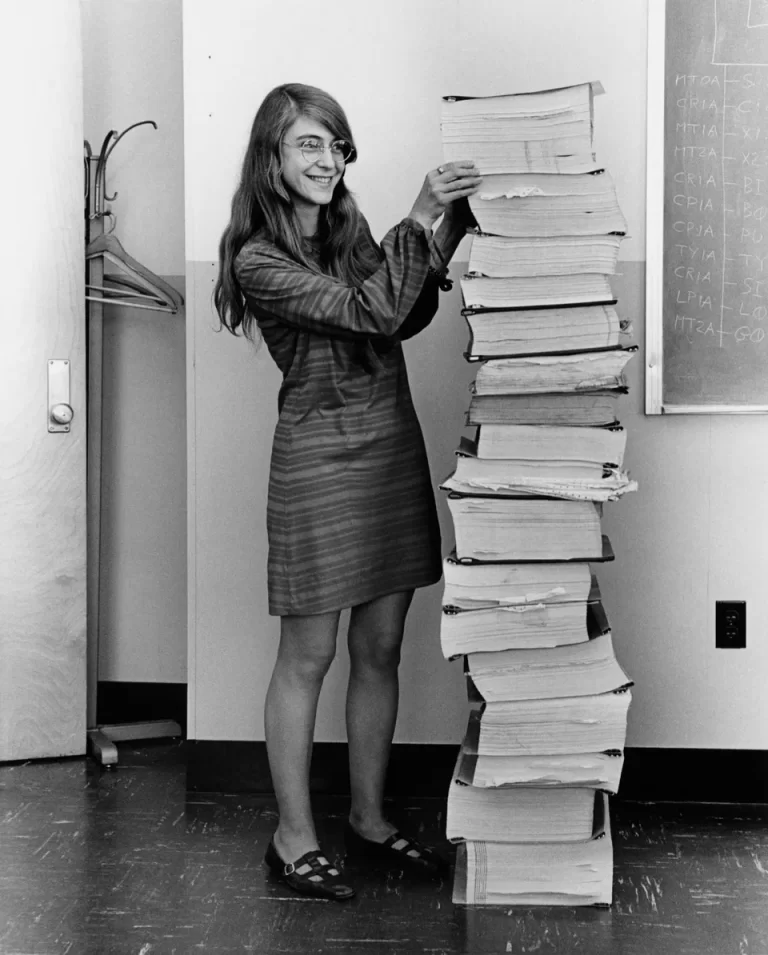
By Adam Cuerden – Retouched, original can be viewed here: Margaret Hamilton.gif, Public Domain, https://commons.wikimedia.org/
Margaret Hamilton
Software Engineer
Margaret Hamilton, computer scientist and pioneer of software engineering, led the SW Engr Division of the MIT Instrumentation Lab, which contracted with NASA to develop Apollo’s in-flight software. She is credited with naming the discipline of Software Engineering. Hamilton was awarded the Presidential Medal of Freedom.
She comments on the Apollo program, “Coming up with solutions and new ideas was an adventure. Dedication and commitment were a given. Mutual respect was across the board. …upper management gave us total freedom and trust. We had to find a way and we did. …there was no choice but to be pioneers.”
When asked to give advice to young women who want a career in coding: “Don’t let fear get in the way and don’t be afraid to say ‘I don’t know’ or ‘I don’t understand’ – no question is a dumb question. And don’t always listen to the so-called experts.”
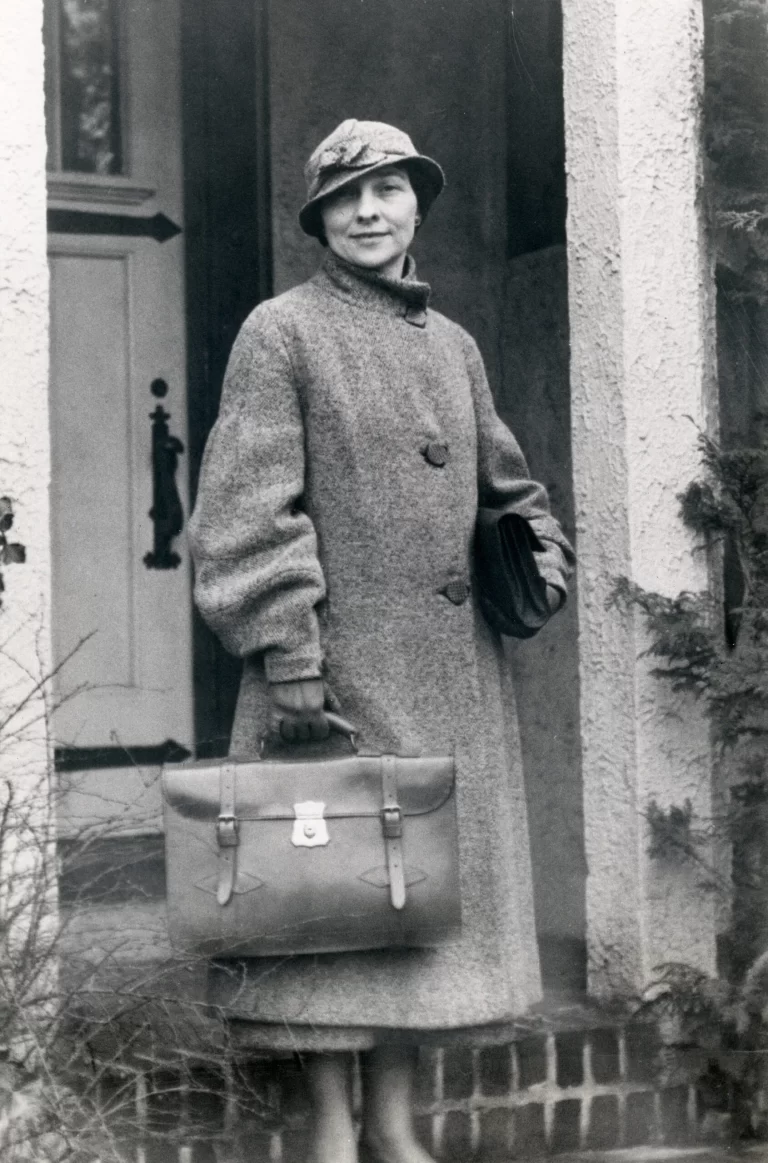
Public Domain, https://commons.wikimedia.org/
Elizebeth Smith Friedman
America's First Female Cryptanalyst
Elizebeth Smith Friedman (1892-1980) was an early cryptanalyst and a leader in developing many of the principles of modern cryptology. She deciphered enemy codes in both World War I and World War II, and broke codes used by drug smuggling rings during peacetime. She taught the next generation of codebreakers at the National Security Agency (NSA).
There are multiple books written about her, including The Woman Who Smashed Codes, A True Story of Love, Spies, and the Unlikely Heroine Who Outwitted America’s Enemies, by Jason Fagone. She is a 1999 NSA Hall Of Honor Inductee.
Friedman “deciphered many encoded messages throughout the Prohibition years and solved many notable cases single-handedly, including some codes which were written in Mandarin Chinese. … After fifty years at her business, Elizebeth Smith Friedman had indeed proved to be a pioneer in code breaking.” – NSA Crytologic History article
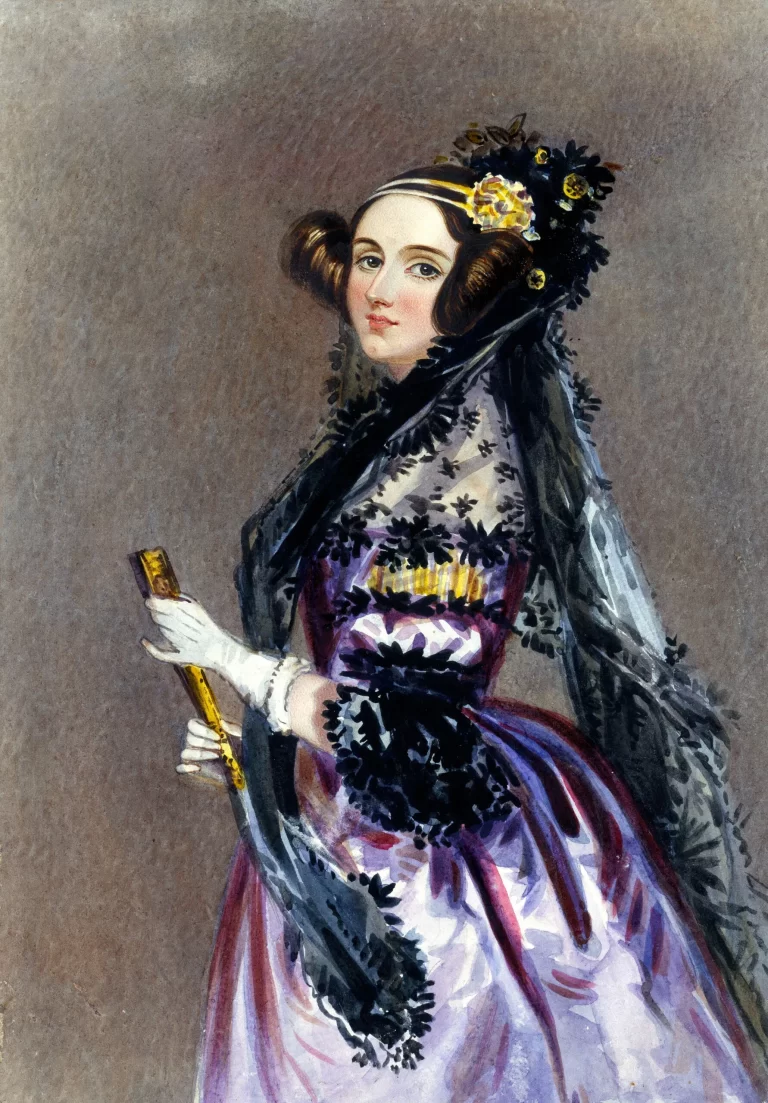
By Alfred Edward Chalon – Science Museum Group, Public Domain, https://commons.wikimedia.org/
Ada Lovelace
First Computer Programmer
Ada Lovelace was the first to recognize that the Analytical Machine had applications beyond calculation, and to have published the first algorithm intended to be carried out by such a machine; thus she is regarded as the first computer programmer.
You can find a few facts about Ada Lovelace (3 mins read) at: 10 Things You May Not Know About Ada Lovelace – HISTORY
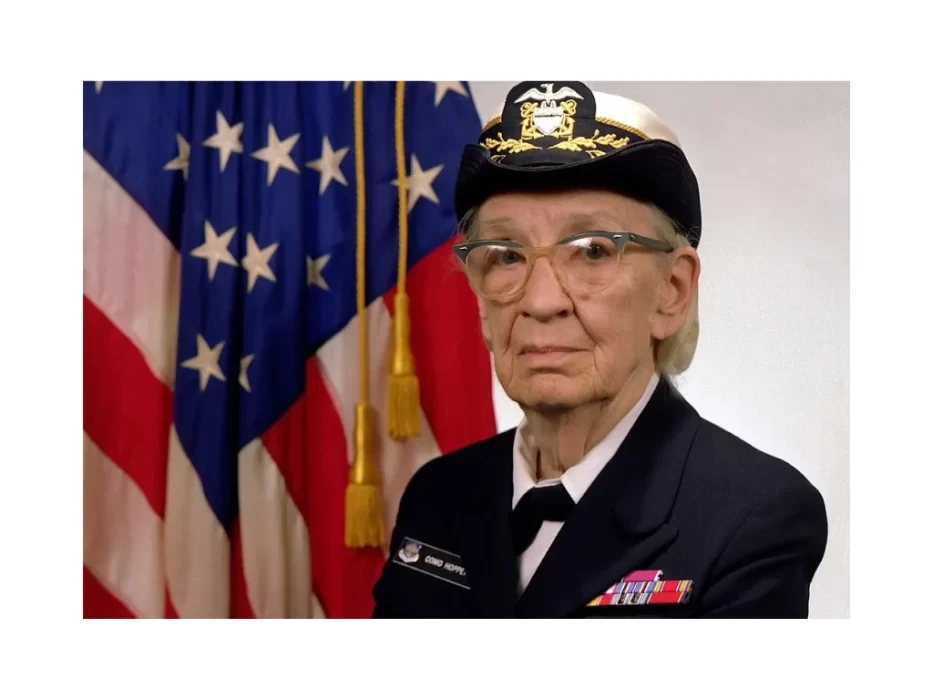
By James S. Davis – United States Navy ID DN-SC-84-05971. Public Domain, https://commons.wikimedia.org/
Grace Hopper
Inventor of COBOL, a Pioneering High-level Programming Language, and the compiler
Grace Hopper was the first to devise the theory of machine-independent programming languages, and the FLOW-MATIC programming language she created using this theory was later extended to create COBOL, an early high-level programming language still in use today.
Yale University named one of its residential colleges after Grace Hopper. Read her short biography on the university’s website (3 mins read): Biography of Grace Murray Hopper | Office of the President (yale.edu)
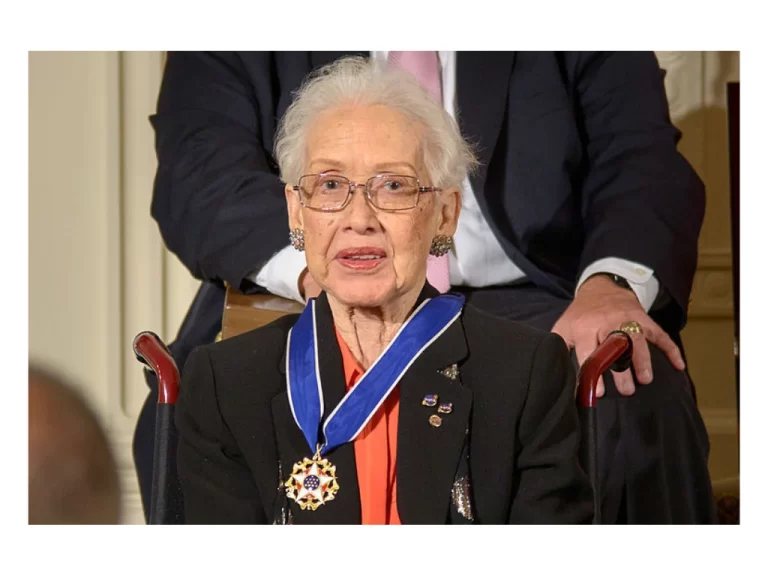

Katherine Johnson
NASA Human Computer - for 1st Human Spaceflight
Katherine Johnson was an American mathematician whose calculations of orbital mechanics as a NASA employee were critical to the success of the first and subsequent U.S. crewed spaceflights.
Learn more about her at (5 mins read): Katherine Johnson (1918-2020) | Former NASA Research Mathematician – NASA Solar System Exploration
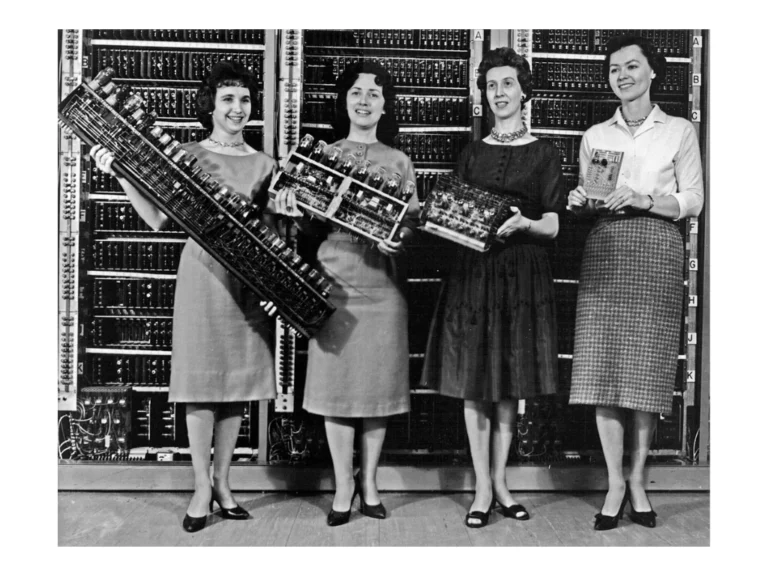
Image from Historic Computer Images
First Programmers of the First Electronic Computer - ENIAC
ENIAC was the first programmable, electronic, general-purpose digital computer, built during WWII, completed in 1945. Kay McNulty, Betty Jennings, Betty Snyder, Marlyn Meltzer, Fran Bilas and Ruth Lichterman were the first programmers of the ENIAC.
Kathy Kleiman, Founder of the ENIAC Programmers Projects, Historian and Author, discovered the ENIAC Programmers as a Harvard undergraduate and a female programmer in search of role models and inspiration. She tells the story about these amazing women in this podcast (37 mins): Clear+Vivid with Alan Alda – Kathy Kleiman: The six women who… (goloudnow.com)
Tech Women Making History
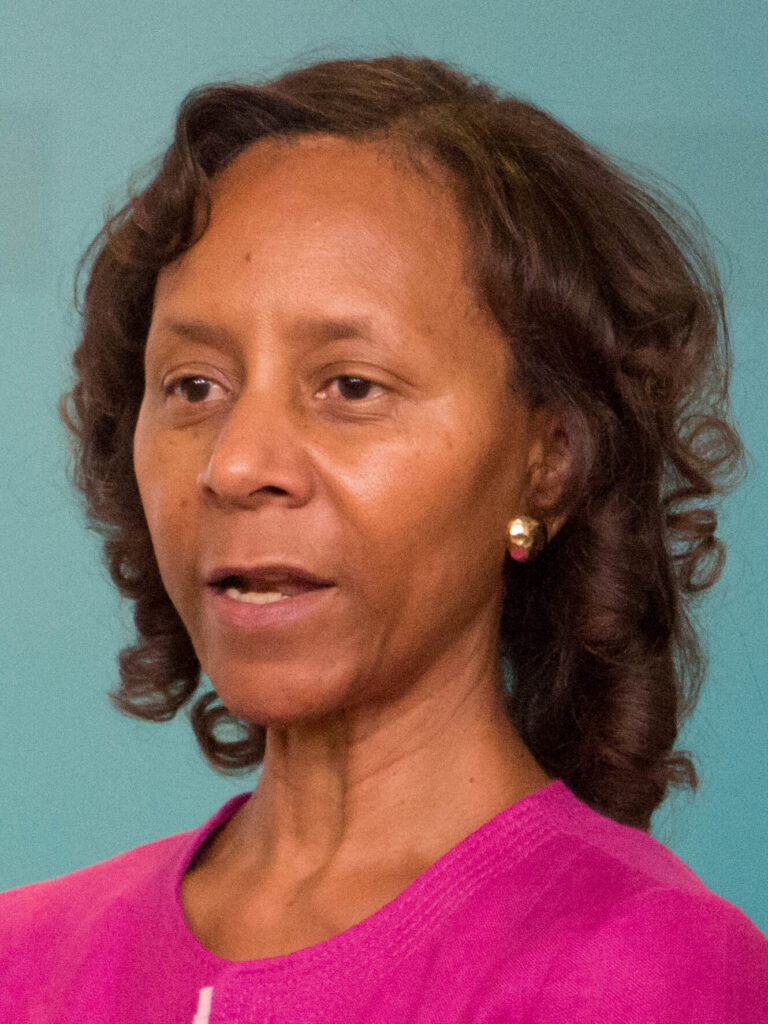
By New America – https://www.flickr.com/photos/newamerica/32576506570/, CC BY 2.0, https://commons.wikimedia.org/w/index.php?curid=158533525
Marian Croak
Prolific inventor of voice and data communications
Marian Croak grew up in New York City with a father that shared the joys of science with her. She was a curious person and investigated how everything in her home worked. She received a PhD in Quantitative Analysis (aka data science) and Social Psychology from USC, and joined AT&T Bell Labs in 1982 to study how technology could be used to improve people’s lives. Note, 1982 was still the early days of technology – the IBM PC came out in ‘81 and the earliest form of the internet in ‘83. AT&T Bell Labs was very interested in using the internet to send voice and video, as an optional service in addition to regular phone calls – but there was no consensus around which networking protocol to use. Croak advocated for using the same protocol being standardized for general traffic on the internet. In the end she prevailed and Voice over IP, or VoIP, became the standard way to send voice and video over the internet. Today it’s the technology behind Zoom, FaceTime, WhatsApp and other apps for work and personal communications. She has earned over 200 patents, almost half related to VoIP but also including how we donate money to organizations over texting. Today Croak is Google’s VP of Responsible AI and Human-Centered Technology, ensuring that AI serves humanity’s needs. To hear from Croak directly, watch this short 3 ½ minute video.
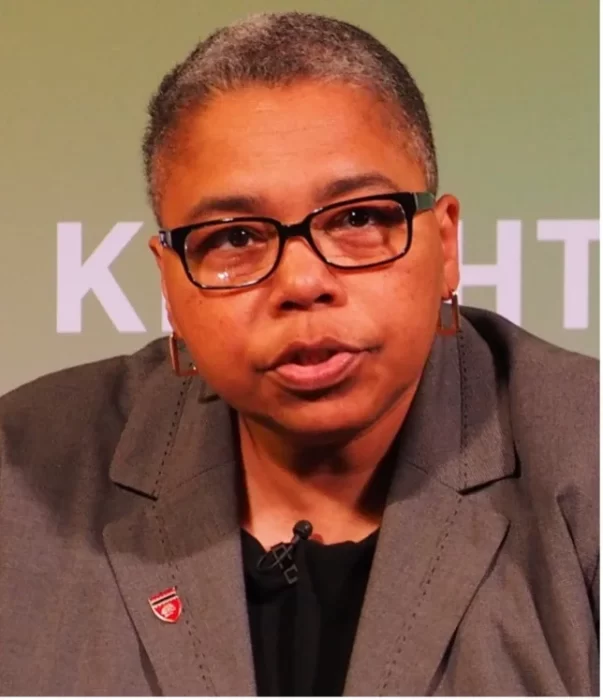
Photo: By Parker Higgins – Own work, CC BY 4.0, https://commons.wikimedia.org/w/index.php?curid=64117464
Latanya Sweeney
Working to shape a world served by technology
Latanya Sweeney is the Daniel Paul Professor of the Practice of Government and Technology at the Harvard Kennedy School and in the Harvard Faculty of Arts and Sciences. As a graduate student, she proved the need for data privacy by correctly identifying people from supposedly anonymized data. Her advocacy was foundational in creating the HIPAA laws restricting the sharing of health data today. She also founded the study of algorithmic bias when she learned that googling her name turned up ads for arrest records, even though she had never been arrested. She served as CTO at the US Federal Trade Commission in 2014, where her goal was to make it easier for people to work on innovative solutions at the intersection of tech, business, and policy. She’s helping to pioneer a new area of study known as public interest technology, launching the Public Interest Tech Lab at Harvard to study how technology is shaping society. She has said, “Technology designers are the new policy makers,” and in her work she focuses on how we can make sure technology serves humanity, not the opposite. Visit her homepage here, watch the pictures stream by and guess which ones are real and which are AI, and explore the tools she’s helped develop thru the Data Privacy and Public Interest Tech Labs, like MyDataCan and VoteFlare.
Lesson: A love of computer science is a natural fit with a desire to make the world a better place.
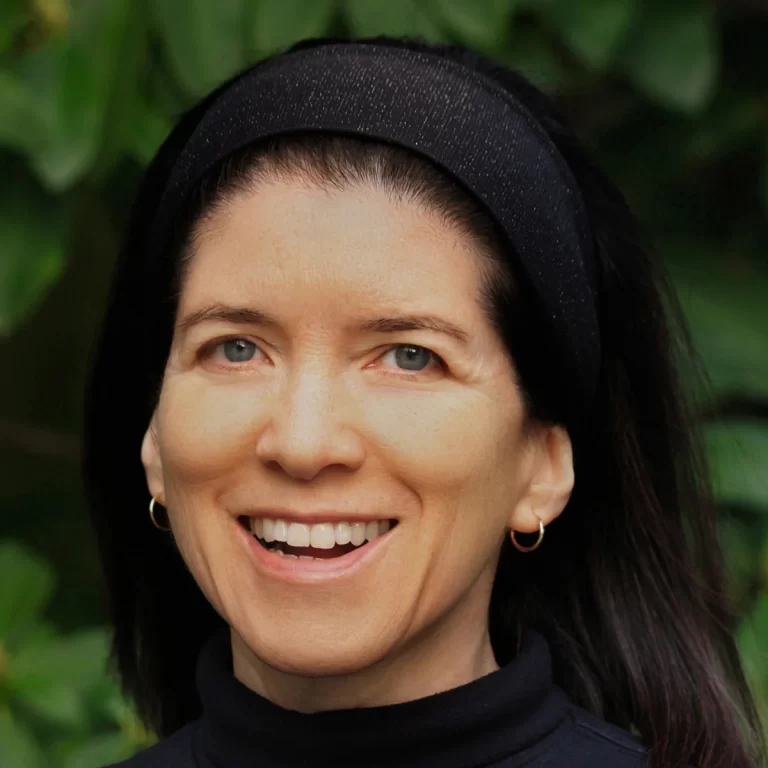
Photo courtesy of Cecilia R. Aragon
Cecilia R. Aragon
Human-centered data scientist, champion pilot, and champion of Latinas in Computing
Cecilia Aragon runs the Human-Centered Data Science Lab in the College of Engineering at the University of Washington and she also is an aerobatic pilot; she wrote books on both topics. As a professor and researcher, she studies the intersection of human-computer interaction and data science/AI to learn how people make sense out of very large data sets. Aragon architected an innovative visual analytics tool for supernova astrophysics, allowing better management of the huge datasets in this field. She developed an augmented-reality system for training helicopter pilots, increasing their ability to land safely by enabling simulations of landings in hazardous conditions. She co-invented a new computer science approach to data storage that reduces the time required to search, improving the performance of a very common task in manipulating big datasets. Aragon co-founded Latinas in Computing providing a forum and a role model for other Latinas to find success in computing. See this 3-minute read for more details, and enjoy this 2-min video.
Lesson: The things you’re good at can help you overcome the fears and beliefs that are holding you back.
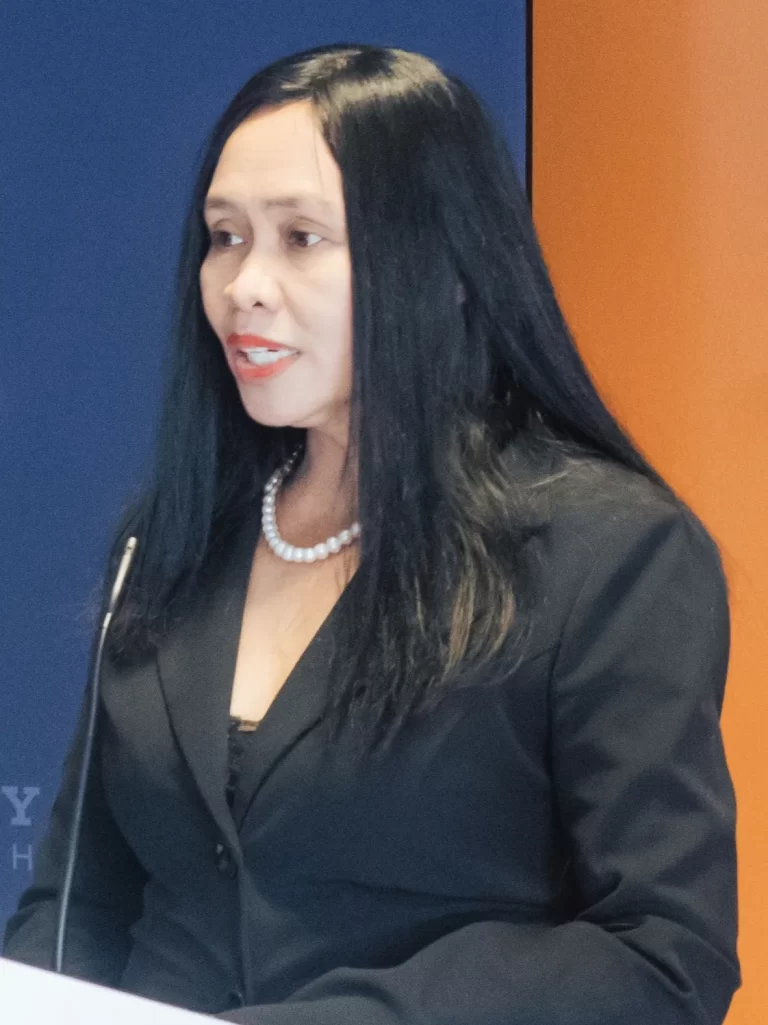
Photo courtesy of Doris Espiritu
Doris Espiritu
Empowering future Engineers and Computer Scientists
Doris Espiritu, inaugural Dean and Head of the School of Engineering at City Colleges of Chicago (CCC), has successfully empowered underrepresented students with an interest in engineering to achieve success in the field. Espiritu founding the Engineering and Computer Science program at CCC’s Wright College in 2018, is now bringing Engineering to other colleges within CCC. She created the Engineering Bridge program to engage students who are interested in engineering but need additional study to be ready for college level math. Students apply, and accepted students spend the summer before Freshman year in intensive math study. The success rate is impressive, with 40% of students able to enroll in a college calculus course after the 6-week program and others reducing needed remedial classes by up to a year. Espiritu also created an Engineering Success Seminar mandatory for first year engineering students at CCC, introducing students to the field of engineering and teaching personal and professional skills critical to an engineering career. It equips students with essential resume writing and interview skills, enhancing their chances of securing an internship and building their confidence and ability to succeed. More detail about Espiritu is here (a 3-minute read), and CCC Engineering is found here.
Lessons: Resources are out there to help you on your journey.
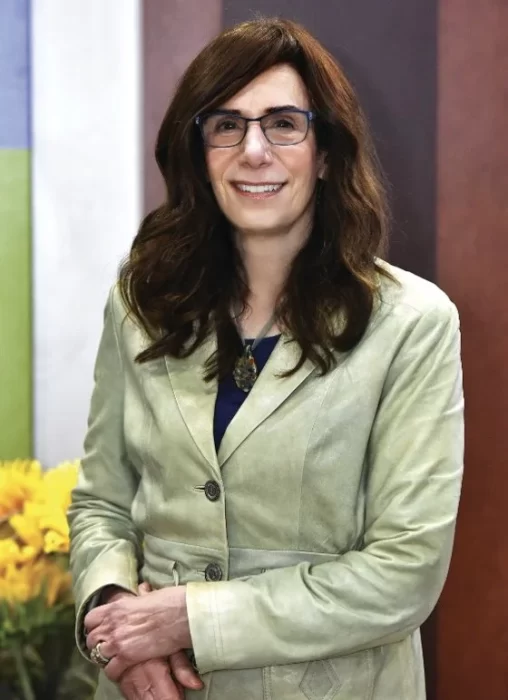
Photo courtesy of Epic Systems
Judy Faulkner
Programmer – Founder – CEO, Epic Systems
In college, Judy Faulkner majored in math, and in a summer job she taught herself how to program. While working on her MS in CS from the Univ of Wisconsin Madison, she created the electronic health record system that became Epic as a project. Her “customers,” the doctors at UW Hospital, had success with her innovative system, and they asked her to start a company – their peers at other hospitals wanted to use it too. After 2 years, in 1979, she started the company with 1.5 people. Epic Systems is still based in Verona WI, their health record system has evolved to cover many needs of the health industry, including the MyChart app. Epic Systems covers more than 325 million patients worldwide. Faulkner has established Epic as a leader and innovator in the healthcare industry, keeping the product tightly integrated and not allowing any outside interference – no mergers or acquisitions, no outside funding – just customer input. In 2015, Faulkner signed The Giving Pledge, committing 99% of her assets to philanthropy. In 2020, she and her husband founded the Roots & Wings Foundation, funding nonprofit organizations that support low-income children and families. To hear from Faulkner directly, watch this 2022 interview (2:28 to 7:50), and check out her Hey, Judy blog.
Lesson: Be firm and clear; make sure your voice is heard.
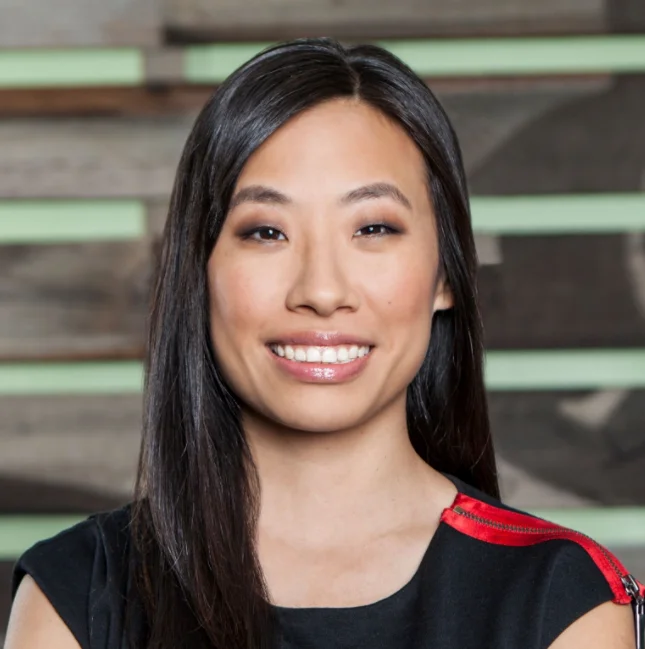
BaobabStudiosWiki, CC BY-SA 4.0, via Wikimedia Commons
Maureen Fan
Virtual Reality Animation Visionary
From a young age Maureen Fan always loved gaming, film, and animation. She fulfilled her creative side by combining CS, Art, and Human Computer Interaction in her BS degree. She worked at eBay as a User Interface (UI) Designer, User Experience Researcher and Product Manager, and decided she wanted to pursue a career in Hollywood. She spent 4 months doing odd jobs in Hollywood, during which she saw enough to know that an MBA would be a help. In addition to providing an overview of running a business, it gave her confidence and taught her how to make decisions. After her MBA she worked at Pixar, and at Zynga as VP of Games. While at Zynga she had a side job involving VR and saw how it would give her the opportunity to do animation – and from the business side, in VR she would be free from competition from the big Hollywood animators. She co-founded Baobab Studios, serving as CEO, and has released several Emmy award winning VR experiences. Learn more at World Economic Forum (3 minute read), and watch She Leads 135: Maureen Fan (34:00 – 36:00).
Lessons: The power of one’s network, persistence and asking for what you need, believing in yourself and not trying to be what society tells you to be, and learning at every opportunity.
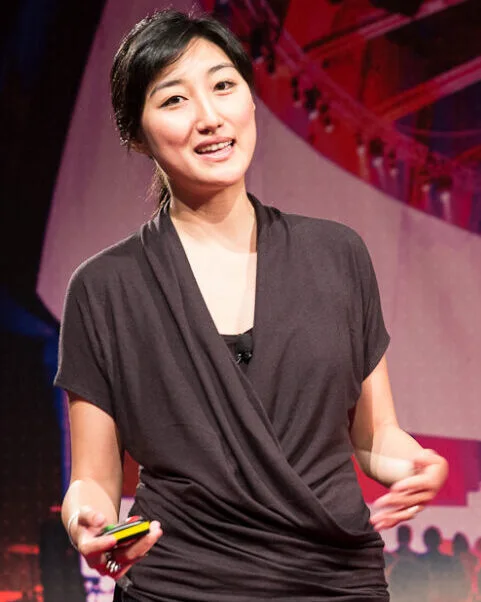
Julia de Boer/The Next Web – JDB_TNW_LR-2123, CC BY-SA 2.0
Jess Lee
First Female Partner at Sequoia Capital
Jess Lee received a degree in Computer Science from Stanford. She became a Product Manager at Google, and in her spare time became enamored with Polyvore, an online fashion startup. She offered the Polyvore founders some suggestions and they hired her – as Product Manager, and later VP of Product. She volunteered to fill in some of the company’s gaps, writing blogs (marketing), talking to advertisers (sales), eventually hiring people to do those jobs, so becoming CEO was a natural progression. In 2016 at the young age of 33 Lee became the first female partner at Sequoia Capital, one of the top Venture Capital (VC) firms in the world ($56.3B in assets under management in 2024), founded in 1972. In 2018 she helped co-found All Raise, a nonprofit dedicated to doubling the percentage of women in partner roles in VC firms within 10 years, and also to doubling total VC funding to female founders by 2030. Learn more at Jess Lee | Sequoia Capital, and watch her 2018 interview Talks at Google (especially 2:50 – 4:53, and 16:20 – 18:36).
Lesson: Take chances, stretch into new experiences, and learn at every opportunity without fear of failure.

By Zichmich – Own work, CC BY-SA 3.0, https://commons.wikimedia.org/
Rina Dechter
Computer Scientist, AI Researcher
Rina Dechter, computer scientist known for her contributions to AI and deep learning, is a Distinguished Professor of Comp Sci at UC Irvine, and a Fellow at Association for the Advancement of AI (AAAI).
Her focus is to influence AI to become “a central paradigm for knowledge representation and reasoning”. She was the first to use the term “deep learning” in a 1986 paper. She has published two books: Constraint Processing, and Reasoning with Probabilistic and Deterministic Graphical Models: Exact Algorithms.
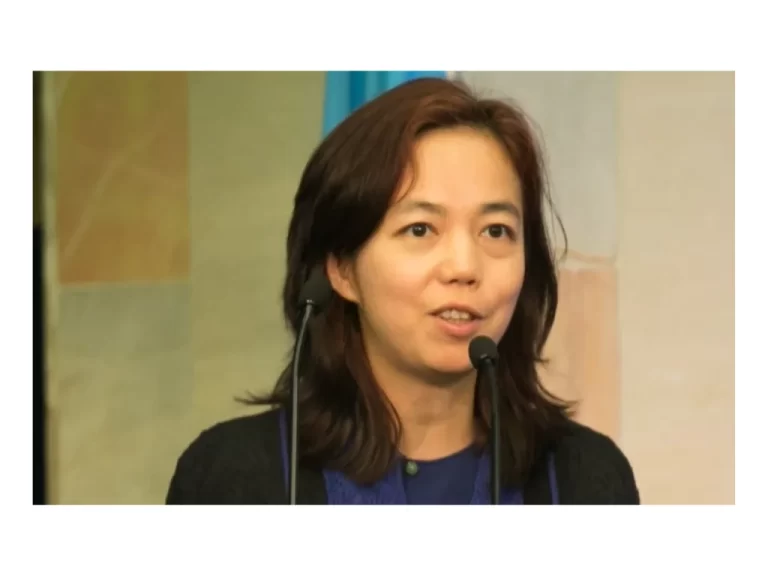
By ITU Pictures https://www.flickr.com/photos/
Fei-Fei Li
A.I. Pioneer, Inventor of ImageNet
Fei-Fei Li invented ImageNet, which has brought breakthroughs in A.I. image recognition which in turn sparked the current A.I. Spring . She is the co-founder and chairperson of nonprofit organization AI4ALL, whose mission is to educate the next generation of AI technologists, thinkers and leaders by promoting diversity and inclusion through human-centered AI principles. She authored The Words I See. Learn more (3 mins read) at Fei-Fei Li: The Researcher Bringing Humanity to AI – History of Data Science.
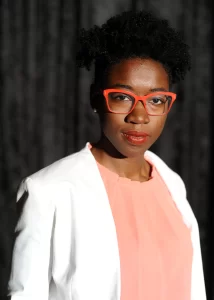
By Niccolò Caranti – Own work, CC BY-SA 4.0, https://commons.wikimedia.org/
Joy Adowaa Buolamwini
Computer Scientist, Digital Activist, Poet of Code
Joy Buolamwini is a researcher at the MIT Media Lab where she works to identify bias in algorithms and to develop practices for accountability during their design. She founded the Algorithmic Justice League (AJL) to promote equitable and accountable AI. Her work has prompted IBM and Microsoft, to improve their software. She creates art to illuminate the impact of AI on society. Her research and art have been featured in films, Ted Talks, exhibits and many publications. Watch her talk (8.5 mins) on fighting bias in algorithms. In 2019, Buolamwini testified before the United States House Committee on Oversight and Reform about the risks of facial recognition technology. She is the recipient of several awards and is on the 2023 Time 100 AI List.